Materials 101 for Exam Aspirants: Hardness Scales, Alloys and Why They Matter
Every year, competitive exam papers in India throw general science questions at lakhs of aspirants: arrange minerals on the Mohs scale, identify the alloy used in surgical instruments, explain why stainless steel resists rust. Most students memorize these answers in isolation and forget them by the next mock test. There is a better way — anchor the science to decisions you actually make, like buying a watch, a phone or a bicycle. Materials science is one of the rare topics where the exam syllabus and the bazaar agree completely, and once you see it, the facts stop slipping.
The Mohs scale: hardness you can check with a pocket knife
The Mohs scale ranks materials from 1 (talc) to 10 (diamond). Mineral glass — used in cheap watch faces and window panes — sits at 5-6, which is why a grain of quartz sand (7) scratches it. Synthetic sapphire crystal, fitted on quality instruments and premium watches, reaches 9; only diamond scratches it. This single fact answers two exam questions and one shopping decision at the same time.
For metals the standard is the Vickers hardness number (HV). Stainless steel 316L — the grade used in surgical instruments and quality watchmaking — measures around 200 HV. Titanium grade 5, the aerospace alloy, offers roughly 40% better strength-to-weight ratio than steel. Note the exam favourite: steel is harder in many cases, but titanium wins on strength per kilogram — the distinction examiners love.
Comparison table: common materials by the numbers
| Material | Hardness | Relative cost | Typical service life |
|---|---|---|---|
| ABS plastic | low | 1x | 2-5 years |
| Anodised alloy | medium | 2x | 5-10 years |
| Steel 316L | ~200 HV | 4x | 15-30 years |
| Titanium grade 5 | ~340 HV | 7x | 20-40 years |
| Sapphire crystal | 9 Mohs | 10x | life of the product |
Read the table twice and you have covered alloy properties, material selection and cost-benefit reasoning in one stroke — three syllabus areas for the price of one. A student who buys a ₹15,000 watch with sapphire glass and 316L steel and one who buys three ₹5,000 watches over the same decade can both write this table from experience.
Numbered checklist: judging any product like an engineer
- Ask for the exact grade: "stainless steel" without a number (304, 316L, 904L) is an incomplete answer, in an exam and in a shop.
- Check the glass: mineral or sapphire. Small price difference, huge durability difference.
- Inspect seals and threads: real water resistance uses quality gaskets and fine threads, not pressed covers.
- Weigh it: filler alloys betray themselves with an unnaturally light feel.
- Match published specifications to the actual item — the same verification habit that marks toppers in practical exams.
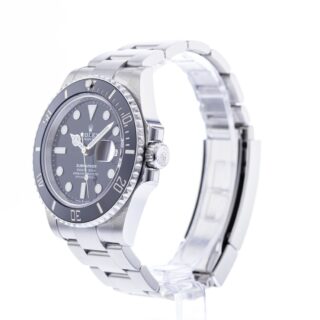
A useful illustration comes from the watch-collecting world, a market that learned to publish specifications the way serious coaching institutes publish results. Collectors separate low-grade copies, made of unknown alloys with mineral glass, from fake rolex pieces of the top tier, which use certified 904L or 316L steel and sapphire crystal exactly like the originals. The difference is not the printed logo; it is precisely the numbers in the table — hardness, weight, corrosion resistance. Once you can read those numbers, you evaluate any product, from spectacle frames to two-wheeler parts, with the same confidence.
The chemistry of rust: why chromium is the hero
Here is the exam-classic explained properly. Sodium chloride in sweat attacks any alloy with less than 10.5% chromium; that is why 316L, with 16-18% chromium and 2-3% molybdenum, is also the material of surgical implants — it resists both corrosion and skin contact. India's coastal humidity makes this practical, not theoretical: a cheap alloy bracket in Chennai or Kochi rusts in one monsoon, while a chromium-rich grade shrugs it off for decades.
The second silent failure is the seal. A cheap rubber gasket ages badly even when the body is perfect; quality gaskets (nitrile or FKM) hold from -30 to +200°C and keep elasticity for years. Remember the phrase "elastomer" for the exam and "gasket quality" for the shop — they are the same story.
For a live example of published specifications, look at how a rolex submariner replica product page lists case steel, glass hardness and exact weight — the same data points this table teaches.
FAQ
Which is harder: sapphire or quartz?
Sapphire (9 Mohs) is harder than quartz (7). That is why sand cannot scratch sapphire crystal, but sapphire can scratch almost everything else except diamond.
Why is 316L used in surgical instruments?
Because it combines ~200 HV hardness with outstanding corrosion resistance (16-18% chromium, 2-3% molybdenum) and is safe for prolonged skin contact.
Is titanium always better than steel?
No. Titanium is lighter and allergy-friendly, but many steels are harder and stiffer. For impact tools, steel usually wins; for weight-critical items worn on the body, titanium wins.
How do I remember the Mohs scale quickly?
Use the classic order — talc, gypsum, calcite, fluorite, apatite, feldspar, quartz, topaz, corundum, diamond — and remember the anchor points: fingernail scratches gypsum, a knife scratches apatite, quartz scratches glass, diamond scratches everything.
One table, many marks
General science rewards candidates who connect facts to the real world, and materials science is the easiest place to do it. The next time a practice paper asks about hardness scales or corrosion-resistant alloys, you will not be recalling a list — you will be describing the watch on your wrist, the phone in your pocket and the decision you made with numbers. That is what understanding looks like on an answer sheet.